


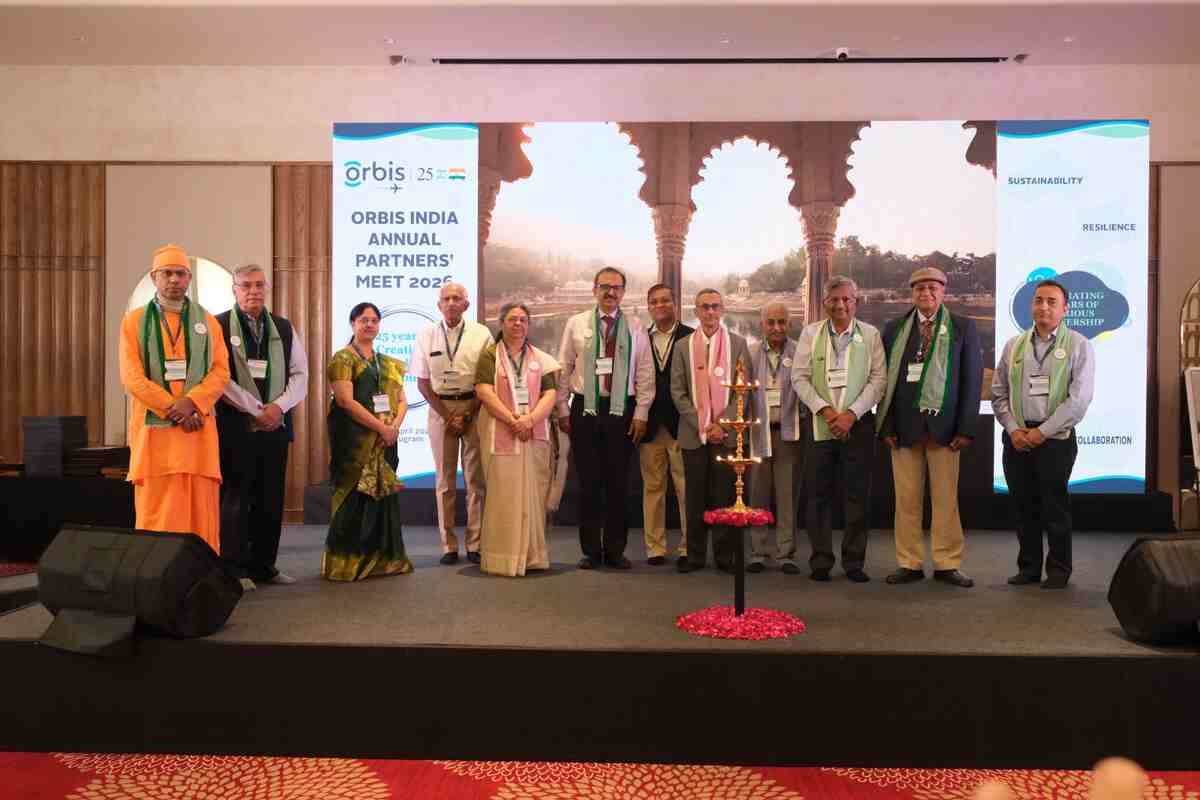
- Orbis Released Key Knowledge Resources Including Coffee Table Book which encompasses 25 life transforming stories, Orbis in India – Alignment with SDGs, and Carbon Footprint Assessment Report
- Healthcare Sector Accounts for Nearly 5% of Global Emissions, Underscoring Need for Greener Eye Care Models
- Green Vision Centres Help Avoid 610,107 kgCO₂e in FY24, Rising to 689,179 kgCO₂e in FY25
- Community-Based Eye Care Expands Reach as GVC Patient Coverage Grows from 75,520 to 93,483
Gurugram, April 11th, 2026: Orbis International convened its India Partners Meet 2026 in Gurugram on April 10–11, bringing together leading healthcare institutions, policymakers, experts, and partners to accelerate collaborative efforts toward eliminating avoidable blindness. Anchored in the theme “Empowering Eye Care Institutions for a Green & Resilient Future,” the two-day convening focused on strengthening partnerships, driving innovation, and building sustainable, future-ready eye care systems across India.
The meet brought together leading institutions, including the Public Health Foundation of India and LV Prasad Eye Institute, along with experts such as Dr. Rajiv Kumar and Dr. Raj Shankar Ghosh, reflecting a strong cross-sector commitment to strengthening healthcare systems and expanding access to quality vision services for underserved populations.
The agenda featured keynote addresses, expert-led sessions, and partner discussions reflecting on progress in eye health and the growing importance of collaboration in addressing emerging challenges such as climate change, sustainability, and healthcare resilience. A dedicated session on Climate Resilient Eye Health underscored the need to integrate environmental sustainability into healthcare delivery, alongside discussions on green healthcare infrastructure, energy efficiency, and climate impact assessment tools for eye care facilities. The convening also saw the release of key knowledge resources, including Coffee Table Book which encompasses 25 life transforming stories, the report on Orbis in India – alignment with SDGs, and the Carbon Footprint Assessment Report.
Over the two-day convening, discussions underscored the growing impact of sustainable eye care models and the need to integrate environmental considerations into healthcare delivery. With the health sector contributing nearly 5% of global greenhouse gas emissions, participants highlighted the importance of greener approaches to expanding access to care. Community-based Green Vision Centres (GVCs) were cited as a key example of this impact, bringing quality eye care closer to communities while reducing patient travel. In FY 2023–24, GVC-enabled services helped avoid 610,107 kgCO₂e emissions, which increased to 689,179 kgCO₂e in FY 2024–25. Vision centre screenings accounted for 24% of avoided emissions in FY 2023–24, rising to 28% in FY 2024–25, while patient coverage through GVCs increased from 75,520 to 93,483 during the same period, demonstrating how community-based eye care can expand access while supporting climate-conscious healthcare delivery.
Speaking at the event virtually, Kathleen Sherwin, President & Chief Executive Officer, Orbis International, said: “As the global burden of avoidable vision loss continues to affect millions, the need for resilient and collaborative health systems has never been greater. India has the opportunity to lead by example by integrating sustainability with innovation and strong partnerships. Convenings like this enable us to co-create solutions that are scalable, impactful, and built for the future.”
Dr. Rishi Raj Borah, Country Director, Orbis (India), added, “This Partners Meet reflects our commitment to strengthening eye care systems that are inclusive, sustainable, and responsive to emerging challenges such as climate change. By bringing together diverse stakeholders, we are fostering collaboration that translates into real impact by expanding access to quality eye care for communities that need it the most.”
Participants also engaged in experience-sharing sessions on sustainable practices, including case studies from leading eye care institutions showcasing scalable models for environmentally responsible healthcare delivery. Sessions on Institutionalizing Green Eye Health and Adaptive Leadership in a Changing Climate underscored the importance of governance, leadership, and innovation in building resilient health systems.
In addition, the meet addressed key priorities such as strengthening primary eye care, enhancing quality assurance, and building human resources for eye health—critical to ensuring long-term, equitable access to vision care services across India.
The meet concluded with a collective Call to Action, reinforcing the importance of partnerships in advancing equitable eye care and outlining a shared vision for scaling sustainable and resilient eye health systems nationwide.
About Orbis International
Orbis International works around the world to prevent blindness and restore sight for children and adults in places where eye care is out of reach so vision problems don’t make it harder to learn, earn a living, or enjoy life. Around 1.1 billion people live with vision loss, but with the right care, 90% of it is completely avoidable. That is why Orbis trains doctors, nurses, and other eye care professionals to provide care in their own communities—and works to make sure people of all ages can access the eye exams, glasses, medicine, and surgeries they need to protect and restore their sight. Orbis began this work more than 40 years ago with the Flying Eye Hospital, a teaching hospital on a plane that brings expert training and care where they’re needed most. Today, we also work with local hospitals and clinics across Africa, Asia, and Latin America to make eye care available to more people, and we use and develop technology—like our award-winning Cybersight e-learning and telehealth platform, artificial intelligence screening, and virtual reality training—to help eye care teams treat patients more effectively. Orbis ranks in the top 3% of U.S. charities, having earned top marks for transparency and accountability from Charity Navigator, GuideStar, and the Better Business Bureau. To learn more, please visit orbis.org.
Orbis in India is part of Orbis International, an international nonprofit dedicated to building strong and sustainable eye care systems so that everyone can access the eye care they need to thrive. In India since 1988, with a country office established in Delhi in 2000, Orbis focuses on preventing and treating avoidable blindness—especially among children—through community-based programs, capacity building, training of eye care teams, and strategic partnerships across the country. Our work covers pediatric eye care, primary eye care, human resources for eye health, and quality assurance, helping expand quality vision services to underserved populations.
