


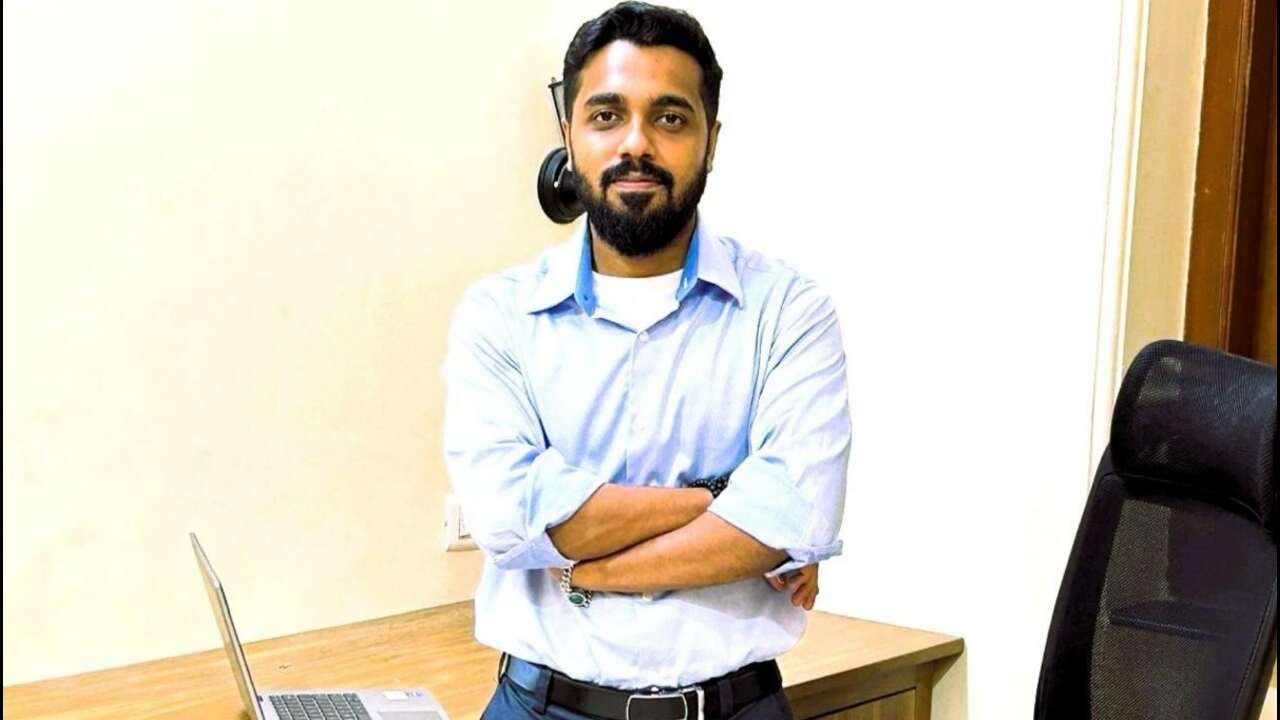
With immense pride and respect, we warmly congratulate Dr. Prathamesh Datta Jadhav on the successful completion of his Doctor of Philosophy in Behavioral Science. This remarkable achievement marks a major milestone in his academic and professional journey.
From Mumbai’s Banking Floors to Behavioral Finance: Prathamesh’s Journey of Curiosity and Conviction
On a rain‑soaked evening in Mumbai, Prathamesh sat leafing through The Economic Times, a ritual he has kept since his school days. Somewhere between the headlines and the hum of the city, a thought struck him: What truly drives investors when markets rise and fall?
His professional hours were spent as a Credit Risk Manager at a foreign bank, immersed in balancing portfolios and decisions. His evenings belonged to research, where he sketched the outlines of a thesis that would explore the psychology of Indian retail investors and he pursued another calling — writing, questioning, and shaping the research that would crystallize into his doctoral thesis, “From Crisis to Compounding.”: “From Crisis to Compounding: A Behavioral Study of Long-Term Opportunity-Seeking Among Indian Retail Investors.”
“Numbers tell you what happened,” he says, “But behavior tells you why it happened. That’s what fascinated me.”
A Scholar with a Practitioner’s Lens
Prathamesh’s journey began with an MBA in Finance, a degree that gave him the technical mastery to navigate markets and risk models. But even during his postgraduate studies, he noticed something unusual: while classmates obsessed over formulas, he was drawn to the human side of finance.
“I remember sitting in class during a lecture on portfolio theory,” he recalls. “Everyone was focused on the math. I kept wondering—what makes an investor stick with a strategy when the market is crashing? That curiosity never left me.”
That curiosity deepened when he entered the banking world. As a Credit Risk Manager, he saw firsthand how decisions were made under pressure. Some investors panicked, some chased trends, and a few quietly stayed the course. “It was like watching human psychology unfold in real time,” he says.
“In 2008, I remember seeing investors line up outside brokerage offices, desperate to sell,” he says. “A decade later, some of those same people were calmly talking about compounding and long-term wealth. That transformation fascinated me.”
The Thesis: Crisis as a Teacher
His PhD research explores how Indian retail investors navigate crises and evolve over time. The study reveals that while fear dominates initial reactions, crises often act as teachers. Investors who endure shocks emerge more disciplined, embracing patience and compounding.
“Crisis is not the end—it’s the beginning of learning,” Prathamesh explains. “It forces reflection. It forces discipline. And eventually, it creates opportunity-seekers.”
He describes the journey as psychological as much as financial: a shift from reactive survival to proactive strategy. His thesis challenges the stereotype of retail investors as irrational, instead portraying them as resilient learners.
Beyond Numbers: Finance with Purpose
For Prathamesh, finance is not just about wealth creation—it’s about empowerment. He believes that understanding investor behavior can help institutions design better products and communication strategies, ultimately fostering financial literacy.
“If we can help retail investors see crises as opportunities, we can change the way they build wealth,” he says. “Compounding is not just a financial tool—it’s a mindset.”
His philosophy reflects a broader vision: finance as a force for resilience, inclusion, and long-term growth.
Looking Ahead
As his thesis garners attention, Prathamesh is already thinking about the next chapter. He envisions platforms where academia and industry collaborate to promote investor education. His long-term goal is to inspire a generation of retail investors who view crises not as setbacks, but as stepping stones.
“I want to see investors who don’t just survive crises, but grow because of them,” he says. “That’s the real power of compounding—it’s not just numbers, it’s resilience.”
Conclusion
Prathamesh’s journey- from MBA student to credit risk manager to doctoral researcher, is a story of curiosity, conviction, and purpose. His thesis, is more than an academic study; it is a reflection of his belief that resilience and discipline can transform the financial journeys of millions.
In a world where crises are inevitable, his work points to a deeper truth: wealth is built not only in markets, but in the mindset of investors who learn, adapt, and stay the course.
Indian Management School and Research Centre is accredited partner of Skill Development Council Canada and registered with the United Kingdom Registrar & Accreditation System – UKRAS the United Kingdom-based global independent accreditation and certification body for the provision of distance learning management programs. IMSR Institute was honored with the National Education Leadership Award for excellence in distance education, and the Excellence in Economic Development Award for Education Excellence.
The Ph.D. program at IMSR India is a distinguished offering designed for working professionals and scholars aiming to advance their expertise in a chosen field. With flexible online learning, expert faculty guidance, and a focus on research-driven outcomes, the program supports academic excellence and career growth. IMSR emphasizes real-world applicability, enabling scholars to integrate advanced knowledge with industry practices. The institute’s commitment to innovation, quality education, and global relevance makes its doctoral program highly sought after. Whether in management, technology, or allied disciplines, IMSR’s Ph.D. journey fosters critical thinking, leadership, and impactful contributions to academia and industry alike.
Indian Management School & Research Centre
New Mumbai | Dubai | Sharjah | Zimbabwe
WhatsApp: 9819120140
Helpline – 9819120140
info@imsrindia.com
