


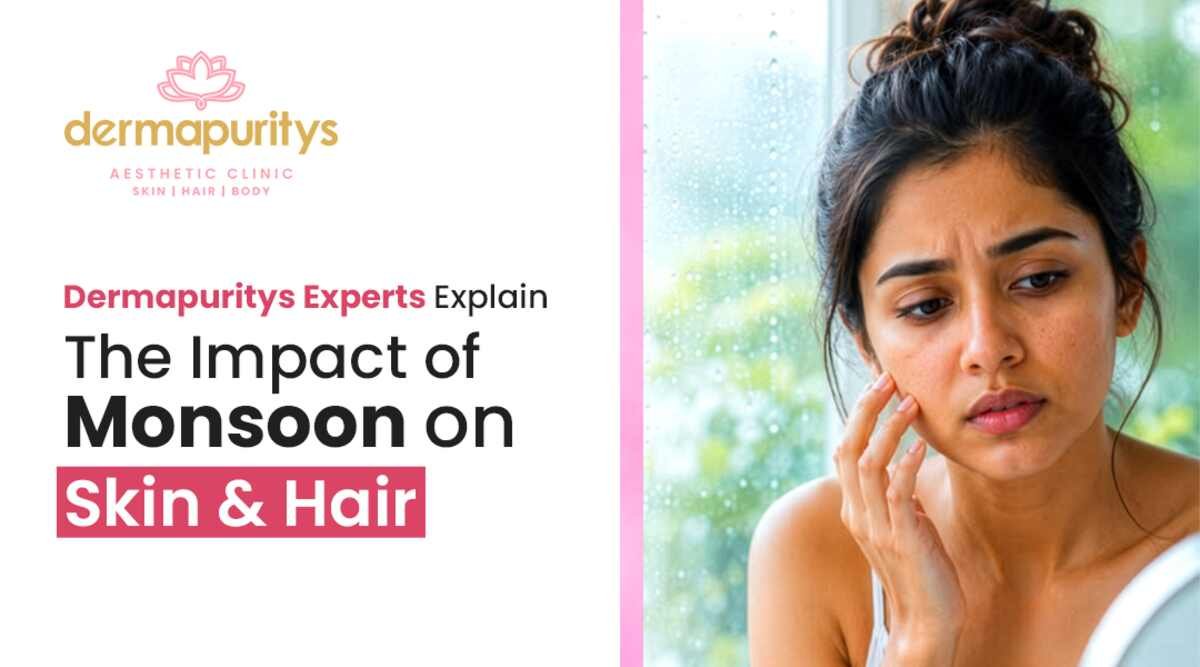
The monsoon changes more than the weather outside. Skin can suddenly feel oilier. The scalp may become greasy. Hair starts behaving differently. Even people who usually have an easy skincare and haircare routine can notice breakouts, dandruff, frizz, or increased shedding during these months.
Dermatologists at Dermapuritys say the change is largely linked to humidity, sweat, pollution, and the way people adjust their daily routines during the rainy season. These factors can affect the skin barrier and scalp environment in different ways.
What Monsoon Does to Skin
Humidity can leave sweat sitting on the skin for longer. It mixes with sebum, sunscreen, makeup, and pollution. This buildup can block pores and contribute to blackheads, whiteheads, and acne.
People with oily or combination skin may notice this more quickly. But monsoon breakouts are not limited to oily skin.
Another common issue is dehydration. Skin can feel greasy on the surface while still lacking enough water. Frequent face washing in an attempt to remove oil can make the situation worse by irritating the skin barrier.
A simple routine usually works better. Gentle cleansing, lightweight moisturisation, and daily sunscreen can help maintain balance.
Why Acne Can Flare Up
Monsoon acne is not caused by humidity alone. Several factors come together.
Sweat stays on the skin. Oil production may increase. Pollution sticks to the face. Heavy skincare or makeup can add to the congestion.
Popping or squeezing pimples can make things worse. It increases inflammation and can leave behind marks or scars.
If acne has been present for months or keeps returning despite skincare changes, it may need more than a seasonal routine. Hormones, genetics, medications, stress, and other factors can also contribute to persistent acne.
How the Scalp Responds
The scalp is affected by humidity too. Sweat and oil can build up around the roots, especially in people who already have an oily scalp.
Dandruff and itching may become more noticeable. Keeping the scalp damp for long periods can also create conditions where certain microorganisms grow more easily.
Wet hair needs extra care. Hair is more fragile when wet, so aggressive towel drying, rough brushing, or tying it tightly can lead to breakage.
This is one reason people may feel their hair has become weaker during the monsoon even when the actual issue is breakage rather than hair loss from the root.
Hair Fall Needs a Closer Look
Seeing extra strands during the rainy season does not automatically mean permanent hair loss.
Hair naturally sheds as part of its growth cycle. Temporary shedding can also follow stress, illness, nutritional changes, or other triggers.
Progressive thinning is different. A widening part, receding hairline, thinning crown, or visible reduction in density should be assessed by a dermatologist.
At Dermapuritys, dermatologists look at the pattern and duration of hair loss along with scalp health before suggesting treatment. Depending on the cause, management may include medical hair-loss treatment, PRP or GFC therapy, scalp care, or hair restoration procedures.
Delhi Adds Another Challenge
For people living in Delhi, monsoon humidity is only one part of the picture. Pollution continues to settle on exposed skin and hair.
Dust and environmental particles can mix with sweat and oil, leaving the scalp and skin feeling dirty even after a short time outdoors.
If you have been caught in the rain, washing or rinsing the hair once you return home can help remove accumulated dirt and pollutants. The same principle applies to the face. Cleanse gently rather than scrubbing aggressively.
Small Changes Can Help
Monsoon skincare does not need to become complicated.
Use products suited to your current skin type. A lightweight, non-comedogenic moisturiser may work better for acne-prone skin during humid weather. Continue sunscreen even when the sky is cloudy.
For the scalp, wash according to how oily or sweaty it becomes. Do not leave wet hair tied up for long periods. Keep combs, brushes, towels, and pillowcases clean.
Avoid changing products every few days. Constant experimentation can irritate the skin and scalp, making it difficult to understand what is actually helping.
When Professional Advice Matters
Occasional acne, mild dandruff, or a little extra shedding may settle with better seasonal care.
Persistent symptoms are different.
If acne keeps returning, dandruff does not improve, the scalp becomes painful or inflamed, or hair fall continues for several weeks, a dermatologist can help identify the underlying cause.
Dermapuritys takes a personalised approach to skin and hair concerns, assessing individual needs before recommending treatment. This is particularly important when symptoms keep recurring, because the visible problem may not always be the actual cause.
Monsoon Care Is About Balance
The goal during monsoon is not to keep skin completely oil-free or wash the scalp constantly. Both skin and hair need a balance between cleanliness, hydration, and protection.
Simple changes can prevent many seasonal problems. Persistent acne, scalp issues, or hair thinning should not be dismissed as something that will automatically disappear when the rain stops.
Dermatologists at Dermapuritys recommend paying attention to changes that continue beyond the season. If a skin or hair concern has been present for a long time or keeps returning, professional evaluation can help determine whether it is seasonal or needs targeted treatment.
