


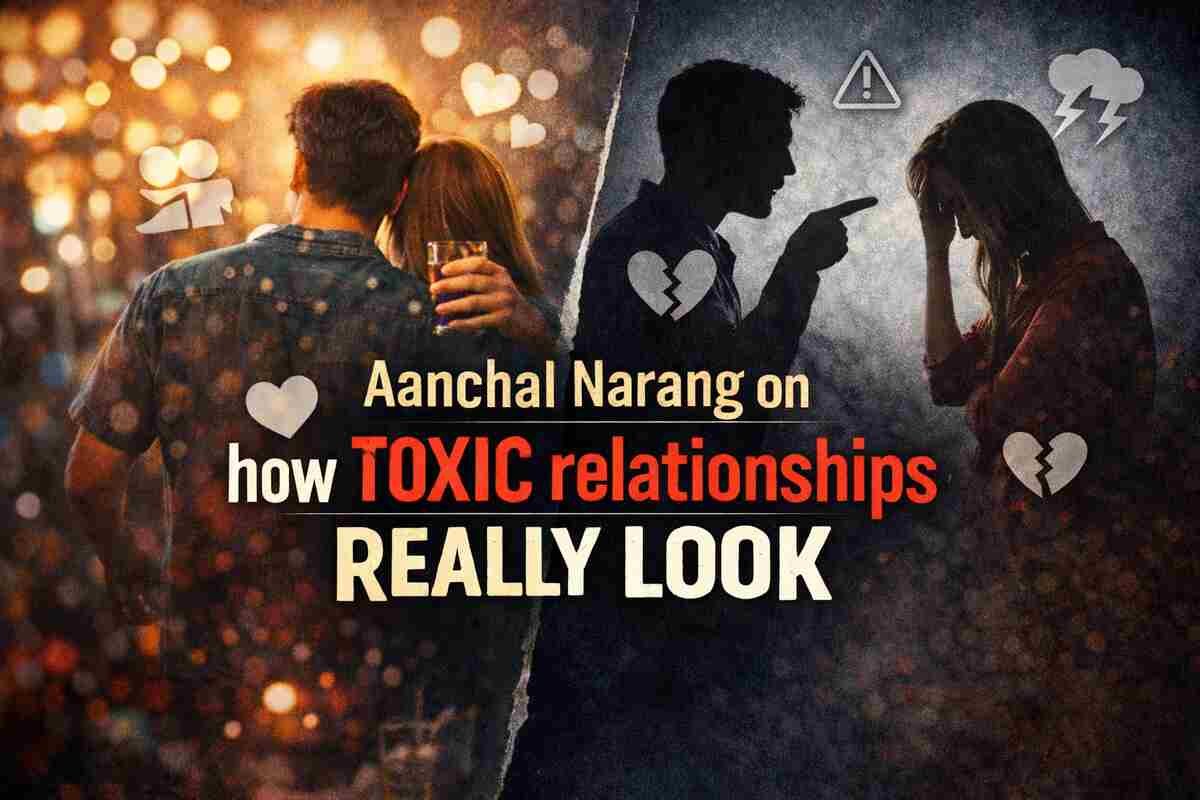
Aanchal Narang often says in therapy:
“Toxic relationships rarely begin as toxic. They begin as the most exciting ones. However, chemistry can distract you from compatibility”
When people hear “toxic,” they imagine obvious dysfunction: screaming fights, cheating, or dramatic breakups. But according to Aanchal, the most damaging dynamics are often subtle, socially acceptable, and even romanticized.
From the outside, these relationships can look ideal. At social events, they appear affectionate, aligned, and deeply connected. They laugh, post pictures, and speak well of each other. It looks like chemistry and closeness.
But public harmony doesn’t equal private safety.
A healthy relationship doesn’t require you to perform stability outside while navigating instability inside. What you feel in private should not contradict what others see in public.
Here’s what toxicity often looks like beyond the clichés.
The Gradual Loss of Self
You don’t lose yourself overnight. It happens in small, “practical” adjustments.
You begin changing:
- How you dress
- What you share
- Which opinions you express
Individually, these shifts feel minor. Over time, they shrink your spontaneity, expression, and sense of security.
Toxic dynamics often include:
- Criticism disguised as “feedback”
- Comparisons framed as motivation
- Emotional withdrawal when you assert yourself
- Conditional approval
The danger is not loud hostility. It’s the quiet belief that being fully yourself creates instability.
Apologies That Don’t Lead to Change
Conflict is normal. Repair matters. But remorse and transformation are not the same.
A common pattern:
- Harm occurs
- Emotional apology follows
- Temporary improvement appears
- The same behavior returns
Tears, vulnerability, and promises can feel convincing. But consistency—not intensity—is the real measure of change.
If the cycle repeats despite repeated conversations, it’s not miscommunication. It’s a pattern.
Control That Looks Like Care
Possessiveness is often romanticized. Jealousy gets labeled as love.
Control can look like:
- Questioning who you meet and why
- Expecting access to your phone
- Making you responsible for their discomfort
- Isolating you from support systems
Aanchal often hears people come to therapy and say:
“He’s just protective.”
“She’s just possessive because she loves me.”
No.
Control dressed as care is still control. Healthy love feels secure, looks secure and is secure.
Emotional Invalidation That Feels Like Logic
Not all toxicity is loud. Often, it’s dismissive.
You express hurt and hear:
- “You’re overreacting”
- “You’re too sensitive”
- “You’re creating problems”
Over time, you start doubting your reactions instead of questioning the behavior that caused them.
This erodes self-trust.
Emotional safety isn’t about agreement. It’s about being able to disagree without having your reality dismissed.
Intensity That Replaces Stability
“Intensity is not intimacy,” Aanchal emphasizes.
Many toxic relationships are held together by trauma bonding — cycles of affection and pain that create deep psychological attachment.
Trauma bonds often form when distress and affection are interwoven. The nervous system becomes attached to relief after discomfort. The cycle can feel meaningful because it is emotionally charged.
There is also often a deeper layer. If someone has grown up around unpredictability; emotionally unavailable caregivers, volatile homes, inconsistent approval — their system may already equate instability with attachment. The body may interpret intensity as familiarity. Familiarity can feel like compatibility.
This is why leaving a trauma bond can feel disorienting. Even when someone intellectually recognizes the harm, their body experiences separation as threat. The craving is not just for the person; it is for the relief that follows distress.
However, closeness built on volatility keeps the body in a stress response. Stability may feel unfamiliar, even boring, but safety is not supposed to feel chaotic.
Recognizing a trauma bond involves asking a difficult question:
Are you attached to the person — or to the cycle?
That distinction changes everything.
Why People Stay Longer Than They Planned To
Aanchal is clear that staying does not mean someone lacks strength. People stay because:
- They remember how it began
- They’ve normalized unpredictability
- They feel responsible for fixing things
Leaving isn’t just about losing a person. It’s about letting go of a future you imagined. That grief can feel heavier than the current discomfort.
What Healthy Relationships Actually Feel Like
A healthy relationship isn’t perfect. It’s regulated.
It feels:
- Predictable in respect
- Calm during disagreements
- Supportive of individuality
- Open to accountability
- Safe for vulnerability
- Consistent, not confusing
- Respectful, even in conflict
- Expansive, not shrinking
You don’t feel like you’re auditioning for care or your emotions are liabilities.
You feel steady.
A Final Word from Aanchal Narang
Aanchal says: “Toxic relationships aren’t defined by how much you love someone. They’re defined by how much of yourself you have to abandon to keep them.”
Love should expand you, not compress you.
Start Your Therapy with Aanchal
- Another Light Counselling Website: https://www.another-light.com
- Book a Therapy Session via WhatsApp: https://wa.me/918879260310
